
Common Cleaning Challenges Commercial Property Managers Face and How to Solve Them
Commercial property managers often deal with inconsistent cleaning, high-traffic wear, and slow response to issues. These challenges can be solved by using structured cleaning schedules, prioritizing high-use areas, and working with a reliable janitorial provider. Consistent cleaning systems help improve tenant satisfaction and maintain a professional property.
Key Takeaways
- Commercial property managers often struggle with inconsistent cleaning, high-traffic wear, and tenant complaints.
- Clear cleaning standards and schedules help prevent most day-to-day issues.
- High-traffic areas require more frequent attention than standard office spaces.
- Working with a reliable janitorial partner improves consistency, response time, and tenant satisfaction.
Introduction
Commercial property managers face recurring cleaning challenges such as inconsistent service, high-traffic wear, and delayed issue resolution. The most effective way to solve these problems is by implementing defined cleaning schedules, prioritizing high-use areas, and working with a dependable janitorial provider.
In multi-tenant office buildings, cleanliness directly affects tenant satisfaction, retention, and overall property value. This guide breaks down the most common cleaning challenges and provides practical solutions that property managers can apply immediately.
What Are the Most Common Cleaning Challenges Commercial Property Managers Face?
Commercial properties experience constant use, which leads to cleaning issues that go beyond basic maintenance.
Common challenges include:
- Inconsistent cleaning quality across different areas
- High-traffic zones becoming dirty quickly
- Slow response to spills or urgent cleaning needs
- Poor communication with cleaning vendors
- Difficulty maintaining standards across large buildings
These challenges often lead to complaints from tenants and visitors if not addressed properly.
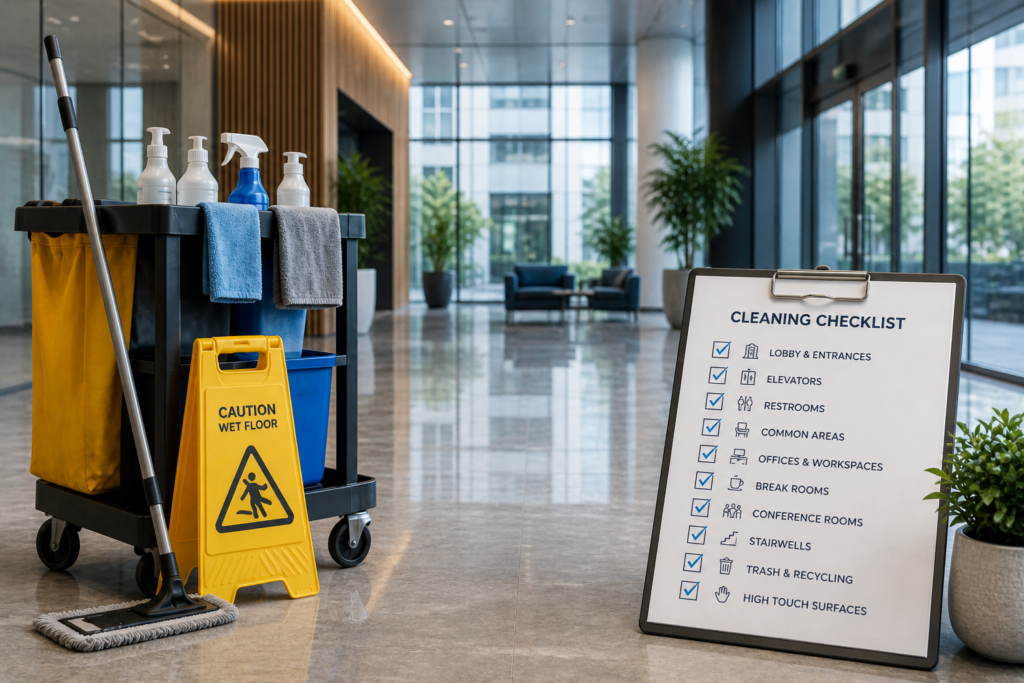
1. How Do You Fix Inconsistent Cleaning Quality?
Inconsistent cleaning is one of the most common issues in commercial properties. Some areas may be cleaned well, while others are overlooked.
To solve this:
- Use a detailed cleaning checklist for all areas
- Set clear expectations for cleaning tasks and frequency
- Schedule regular inspections or walkthroughs
- Work with cleaning providers that offer supervision and quality control
Consistency improves when cleaning teams follow structured processes rather than ad hoc routines.
2. How Do You Manage High-Traffic Areas Effectively?
Entrances, lobbies, restrooms, and shared spaces tend to get dirty faster than other areas.
To manage high-traffic zones:
- Increase cleaning frequency in these areas
- Use day porter services for ongoing maintenance
- Schedule multiple cleanings during peak hours
- Place mats and protective flooring in entryways
Focusing on high-traffic areas helps maintain overall building cleanliness throughout the day.
3. What Causes Delayed Cleaning Response and How Can It Be Improved?
Delays in cleaning response often happen when there is no clear system for handling issues.
Common problems include:
- Spills not being addressed quickly
- Trash overflow during busy periods
- Lack of communication between staff and cleaners
Solutions include:
- Assigning on-site day porters
- Creating a clear reporting system for cleaning issues
- Establishing response time expectations with cleaning providers
Quick response times prevent small issues from becoming larger problems.
4. How Do You Improve Communication With Cleaning Providers?
Poor communication leads to missed tasks and unresolved issues.
To improve communication:
- Assign a dedicated point of contact
- Schedule regular check-ins with the cleaning team
- Use simple reporting systems for tracking issues
- Provide feedback based on inspections
Strong communication ensures that expectations are understood and met consistently.
5. How Do You Maintain Cleaning Standards Across Large Buildings?
Large office buildings with multiple floors or tenants require structured systems to maintain consistency.
To manage large spaces effectively:
- Divide cleaning tasks by zones or floors
- Use standardized checklists for each area
- Implement scheduled inspections
- Work with cleaning providers that can scale services
Breaking down tasks into manageable sections helps maintain quality across the entire building.
Cleaning Challenges by Property Type
Different types of commercial properties may experience different cleaning issues.
- High foot traffic in shared spaces
- Daily cleaning requirements
Medical Offices
- Strict sanitation and disinfection needs
Retail Spaces
- Constant cleaning due to customer traffic
Multi-Tenant Buildings
- Varying tenant expectations and usage patterns
Understanding these differences helps property managers adjust cleaning strategies accordingly.
Best Practices for Preventing Cleaning Issues
Preventing cleaning challenges is often easier than fixing them later.
Best practices include:
- Establishing clear cleaning schedules
- Prioritizing high-traffic areas
- Conducting regular inspections
- Working with experienced janitorial providers
- Maintaining open communication with cleaning teams
These practices help ensure consistent cleanliness and reduce tenant complaints.
Conclusion
Commercial property managers face cleaning challenges that can affect tenant satisfaction and building performance. Issues such as inconsistent cleaning, high-traffic wear, and slow response times are common but manageable with the right systems in place.
By implementing structured cleaning processes and working with reliable janitorial providers, property managers can maintain clean, professional environments and improve tenant experience across their properties.
Need Commercial Cleaning for Your Property?
All Janitorial Service, Inc. provides professional office and commercial cleaning across San Mateo County, Palo Alto, Mountain View, San Bruno, Los Altos, Sunnyvale, Santa Clara, and San Jose. Request a walkthrough today and receive a customized cleaning plan for your building.